
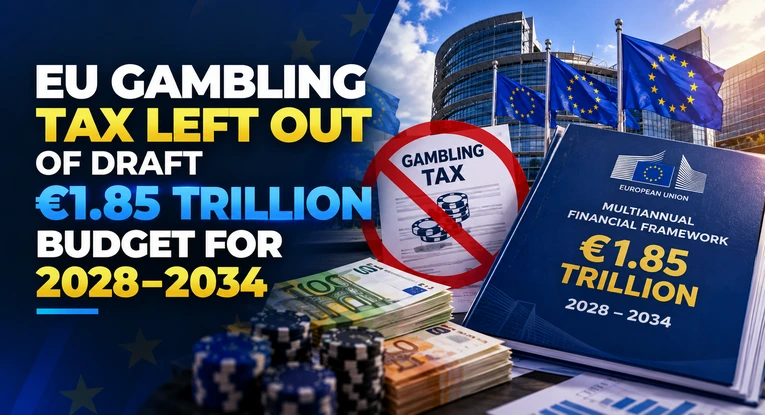
A proposed EU-wide tax on online gambling has been left out of Ireland’s initial negotiating draft for the European Union’s 2028–2034 budget, dealing a setback to supporters of a levy that was projected to raise billions of euros annually.
The proposal called for a 1% tax on licensed online gambling revenue across the bloc. Backed by Romanian MEP Victor Negrescu and the Socialists and Democrats (S&D) group, the measure was presented as a potential source of funding for education, mental health services, addiction prevention and youth programmes.
However, gambling is absent from the revenue measures outlined in the latest draft, which remains subject to negotiations among EU institutions and member states.
Proposed 1% Levy Missing From EU Revenue Plans
Supporters of the gambling tax argued that the levy could generate between €2bn and €4bn annually, with estimates suggesting approximately €14bn over the seven-year budget period.
The proposal faced opposition from parts of the gambling industry and several member states. The European Gaming and Betting Association (EGBA) criticised the plan, while Malta argued that gambling taxation and regulation should remain under national control.
The omission means the proposed levy is not currently part of Ireland’s draft negotiating position. It does not, however, amount to a final EU-wide decision on whether such a tax could be introduced.
EU Budget Draft Targets Up to €55bn in Annual Revenue
Ireland is steering negotiations on the next Multiannual Financial Framework (MFF), which will determine the bloc’s long-term spending priorities and revenue arrangements.
The draft sets a spending ceiling of €1.62 trillion in constant 2025 prices, equivalent to around €1.85 trillion at current prices, below the initially proposed €2 trillion package.
Other potential EU revenue sources remain under consideration, including measures linked to emissions trading, electronic waste, tobacco and carbon offsetting. Together, the measures included in the draft, excluding gambling, could generate up to €55bn annually, according to initial estimates.
The document also retains the proposed Corporate Resource for Europe (CORE) mechanism, which would require companies with annual revenue above €100m to make a flat-rate contribution.
Final Decision Still Requires EU Approval
The absence of a gambling levy comes as EU leaders continue to discuss how to finance priorities including defence, energy security, technological innovation and workforce reskilling.
European Commission President Ursula von der Leyen and European Council President António Costa have both supported efforts to strengthen the EU’s financial independence through additional revenue sources.
The budget draft is non-binding. The final 2028–2034 framework will require unanimous approval from EU member states in the Council and the consent of the European Parliament.
For the gambling sector, the immediate takeaway is that the proposed 1% EU-wide levy has not made it into the current draft, although negotiations on the bloc’s long-term budget are not yet complete.